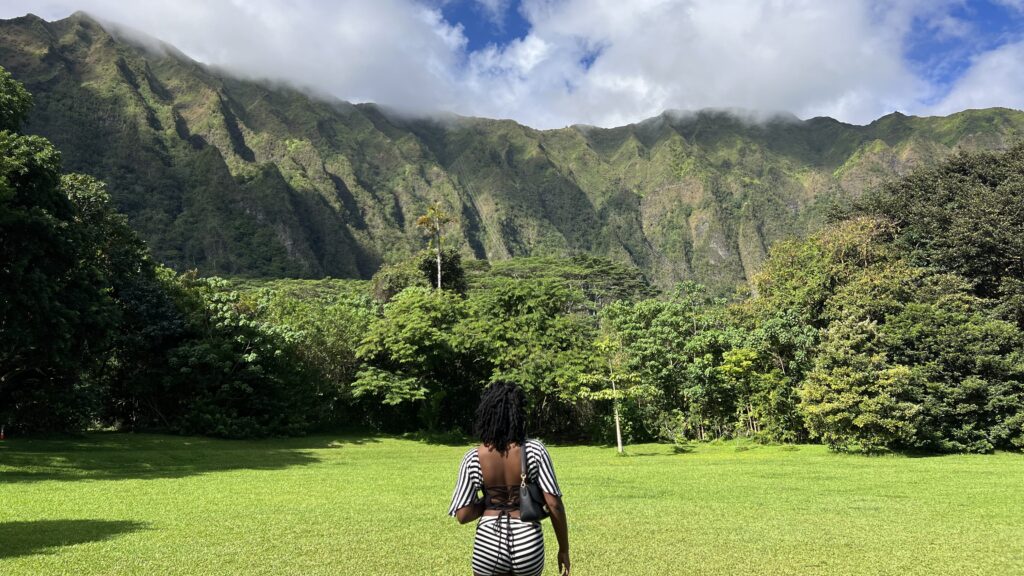
My vacation in Hawaii was like taking a trip home to the US Virgin Islands. Of course, there are significant differences, such as history, culture, and landscape, between the two places. But the bulk of what connects us remains the same. Two tropical locations, situated on completely different sides of the world, were used as military assets for one of the world’s strongest empires. Here is what I found that connects Hawaii and the US Virgin Islands.
Natives in Hawaii and the US Virgin Islands beg tourists to respect the land.
Is it a trait of tourists to be chronically ignorant? In my experience, there is a difference between a tourist and a traveler. A tourist is often a person of heavy colonizer tendencies, traveling and devouring the world at their whim. I have heard numerous accounts of people mentioning that Hawaiians and Virgin Islanders are not friendly. However, through close analysis, I understand that these natives are indeed friendly. They are just protective of their land, history, culture, and people in a world where their mother nation’s messaging is the opposite.
Both pay a stark price.
Island life is not easy. Island life under colonial rule adds another layer of oppression to an already complex landscape. Island states and territories of the United States often must import most of their goods like food, supplies, and textiles. The importation of these everyday essentials comes with a price-hike when compared to the cost on the mainland. So, in addition to waiting for everything you need to arrive on an island, you also have to pay a stark price.
The identities of people from the US Virgin Islands and Hawaii are complex and real.
I noticed that islanders from the US Virgin Islands and Hawaii never primarily identify as American. The American identity is as far-removed from islanders as their islands’ placement in relation to the continental United States. It also does not help that mainland Americans often “other” American islanders, and quite frankly, are ignorant of our history and culture.