
Deep South to Cuba: Life Lessons in Equality, Security, Freedom
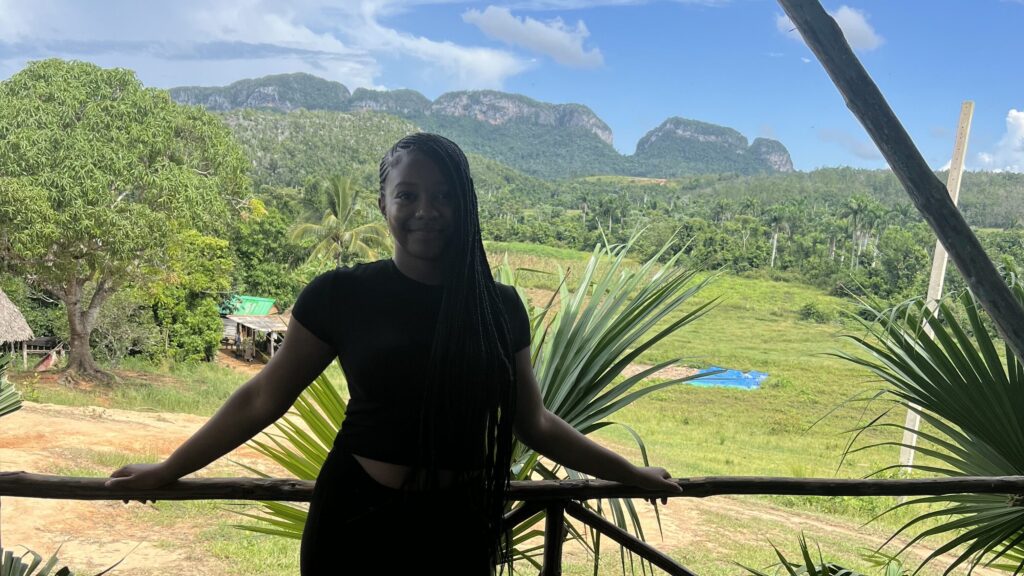
Attending a predominantly white institution (PWI) in the Deep South of the United States radically reshaped my worldview. It deepened my connection to the teachings of Black revolutionaries from the Civil Rights Era, one of whom was Assata Shakur. Her daring autobiography illuminated many of the racial and societal dynamics I faced. Assata’s story of unjust incarceration and eventual escape to Cuba resonated deeply with me. She described Cuba as a sanctuary free from the racial and class biases she experienced in the U.S. Inspired by her narrative, I embarked on a journey to explore a place my unsung hero called home. Here’s what I discovered during my trip to Cuba:
Cuba is home to the world’s outcasts.
Assata Shakur is not alone in seeking refuge in Cuba. While visiting, I met expats from China, Russia, and the United States—all drawn to the country’s promise of equality. Assata’s depiction of Cuba as a society that treated everyone equally struck a stark contrast to life in America. Even as a “free” individual, I often feel the lingering effects of slavery and segregation, which many Americans now try to erase from history.
Fidel Castro, Cuba’s former prime minister and president, prioritized creating an equitable society for all, regardless of race or class. This commitment to equality resonates with people worldwide, especially those weary of inequity. Cuba’s allure as a sanctuary of fairness is undeniable.
US propaganda is powerful and damaging.
America excels at using media to shape its narrative. From its founding days to the present, the United States has wielded propaganda as a powerful tool to advance its agenda. This was evident in the aftermath of Fidel Castro’s rise to power. Wealthy Cubans who fled the country used their influence to push for strict U.S. embargoes on Cuba, severely restricting the island’s access to basic necessities.
These embargoes forced Cubans to innovate and adapt, fostering a culture of resilience and self-reliance. America’s relentless pursuit of power often leaves other nations to bear the consequences of its ambitions.
Security in Cuba is unparalleled.
Cuba is remarkably safe, with minimal violent crime and strict gun control. Women can confidently walk the streets alone, despite occasional catcalls. Tourists, though easily identifiable, are met with warmth and kindness. The country relies on tourism to boost its economy, and Cubans treat visitors as though they are one of their own.
Beyond personal safety, Cuba offers a sense of social security. Mothers can access dairy-free foods at farms like Vista Finca Hermosa in Havana to care for their lactose-intolerant children. Education, from primary school through college, is free. Medical treatments are available at no cost, as long as supplies permit. It’s a system that prioritizes people’s needs over profit—something many would find enviable.